Too Much Love

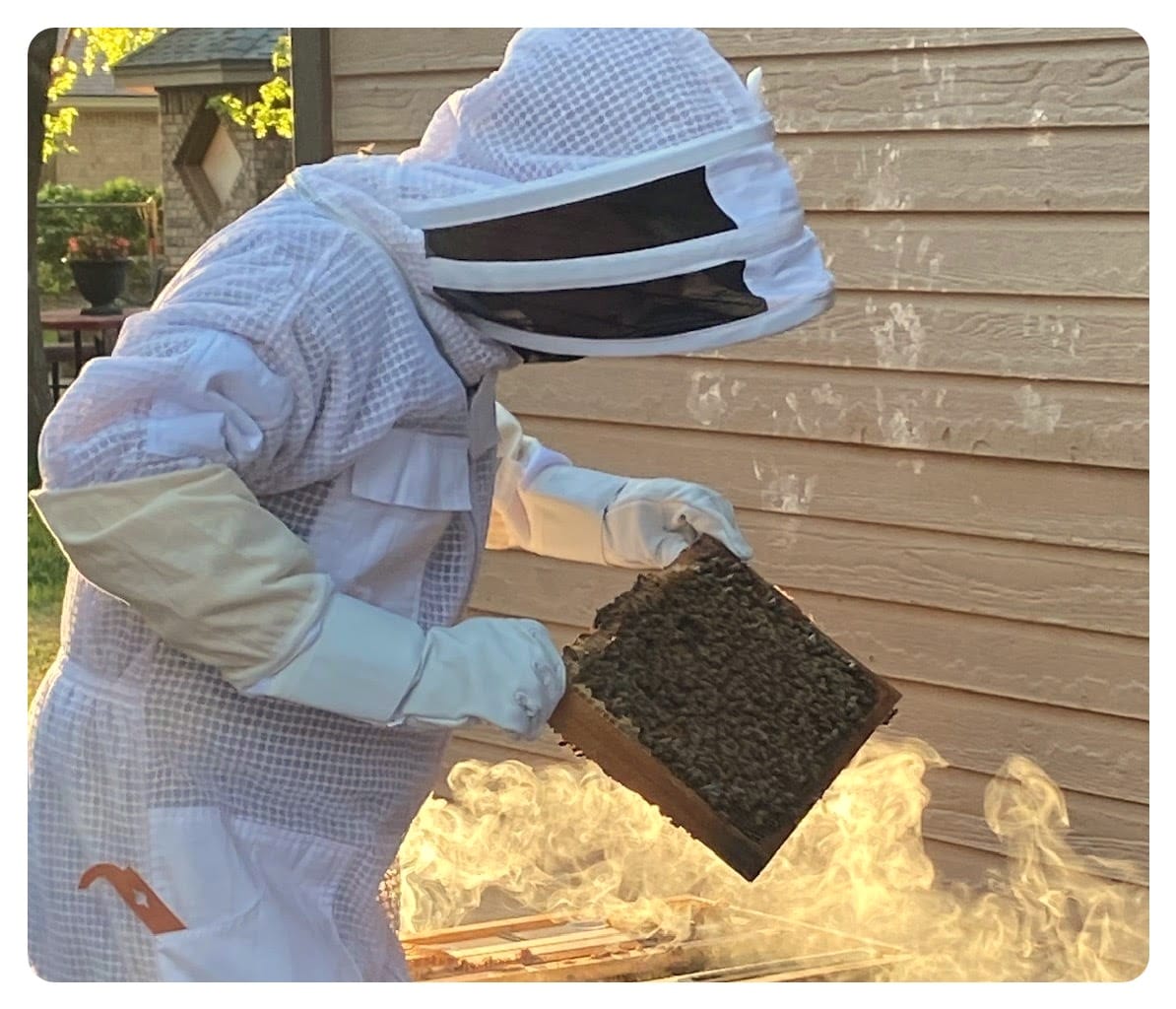
I remember my first year of beekeeping. I could not have been more excited... and nervous! I spent early spring getting all my gear together. I bought my first hive boxes that I assembled myself. I bought my first bee suit, hive tools and smoker. I had all the gear and was ready to go. I decided to begin with two nucleus hives (known as nucs). Nucs are like a starter hive with five frames bees, including an active queen who has already begun laying. It's the easiest way for a new beekeeper to get started.
I drove 6 hours just northeast of Dallas to pick up my bees, which was an experience in and of itself. I drove straight into the bee yard of this supplier and bees were flying everywhere. Someone walked up to my car in a bee suit and I carefully cracked the window to give them my name. It felt like I was doing a drug deal on the outskirts of a nuclear fallout zone.
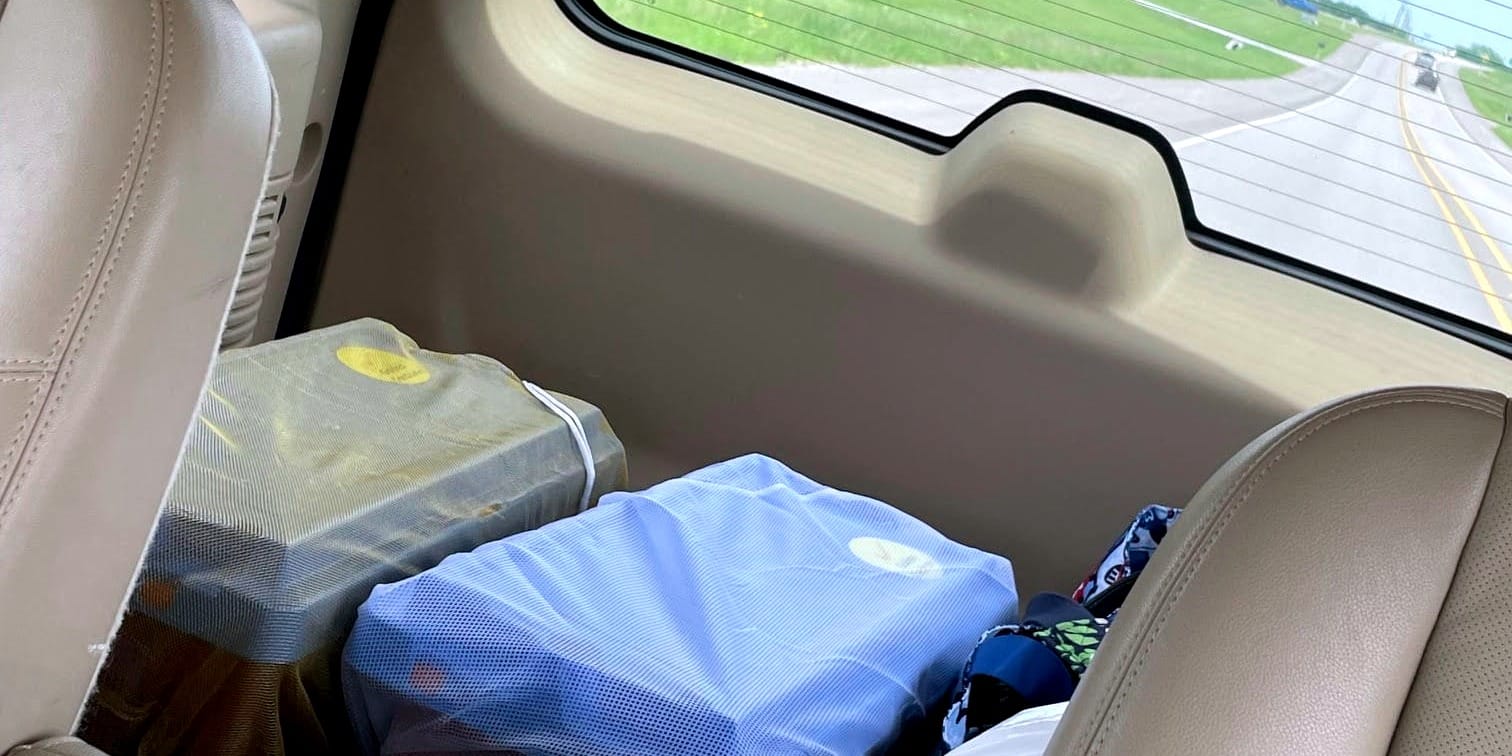
They took the information and then located my nucs (not to be confused with atomic weapons). They put each nuc in a "bee bag" that would keep the bees from escaping inside my car. And then they loaded up all 20,000 bees in the back of my 4Runner. That's right... 20,000 bees. To be honest, it was slightly terrifying! Not only the number of bees I was transporting for the next 6 hours, but also the fact that it was now my job to keep them alive.
Once we arrived home, my hive boxes were ready and waiting for the new arrival. The transition went smooth, as I transferred the frames out of the nuc and placed them in their new home. I fed them sugar water, added 5 more empty frames to fill the box (each box has 10 frames), and now it was time for the bees to get busy.
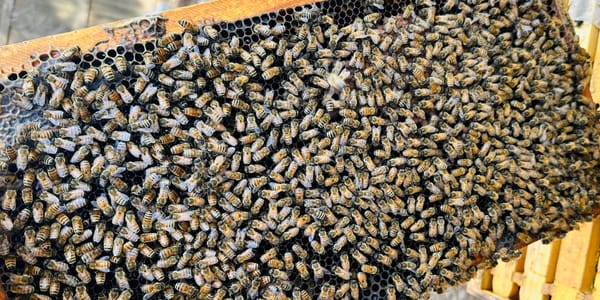
Most every week, I was diving inside the hive to see what was happening. Much to my excitement, the bees were devouring the sugar water I was feeding them and then turning it into the most beautiful, pristine, white wax as they expertly built new comb. They queen was busy laying eggs as the brood nest (where baby bees develop) continued to grow. A healthy queen will lay 1500 eggs a day as the population of bees continued to grow through the spring and summer.
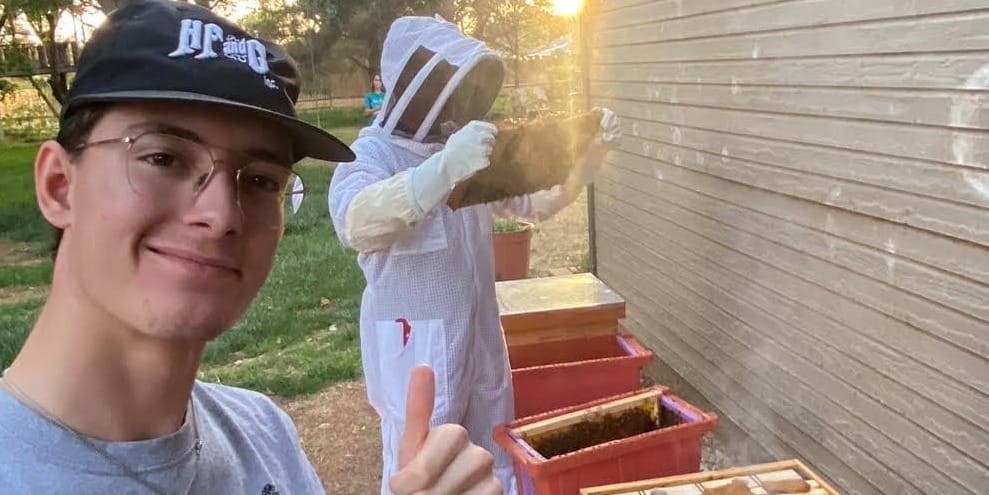
Every week I would learn new things. I started to recognize the difference between the boy bees (drones) and the girl bees (workers). Every once in a while, I would actually see the queen. This was exciting because finding the queen is like game of hide and seek... and the queens usually wins. As I pull out one frame for inspection, she runs to the next one. Hiding in the dark, often covered and protected by other bees.
By mid-summer, I was adding a second box. The population was growing and they simply needed more room to expand. Otherwise, if left unattended, the hive would become too crowded and trigger a swarm. This is the honey bees natural reproductive cycle as 60% of the hive takes the original queen and leaves to find a new home. Those who remain in the original box will raise a new queen (more on that in a future post). But there was no guarantee it would be a success. As a new beekeeper, my goal was to keep them happy and healthy by giving them plenty of room to grow.
When I wasn't diving inside to inspect the hive, I would go out the the bee yard (also called an apiary) and I would sit between my hives and read a book. These original hives were so calm and gentle, so we spent many summer days just hanging out together.
As the fall arrived, it was time to get ready for winter. This is the season when most beekeepers lose their bees. Especially new beekeepers! Bees usually don't survive the winter for two main reasons. Either they didn't have enough resources (honey and pollen) to keep them nourished when there is no other food available. Or the bees are killed by viruses that are transferred from parasites that spread disease. I was not going to let either of those things happen.
So every week, I would inspect my hive, making sure they had plenty of resources. I treated my colonies to prevent the parasitic mites from infesting the hive. And when winter came knocking, my bees had all they needed to survive.
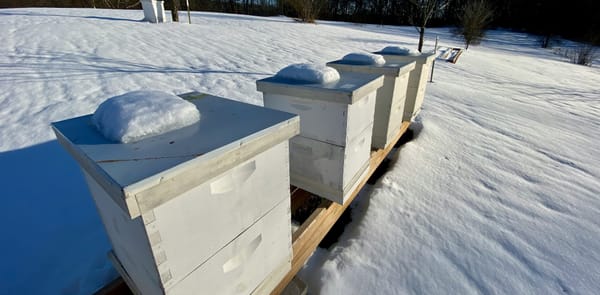
Once winter arrives, the hive inspections are rare. The bees work hard to keep the colony at a warm 97 degrees, no matter what the temperature is outside (more on that later as well). And if the lid is removed, all the heat escapes. So in the winter, all a beekeeper can do is wait.
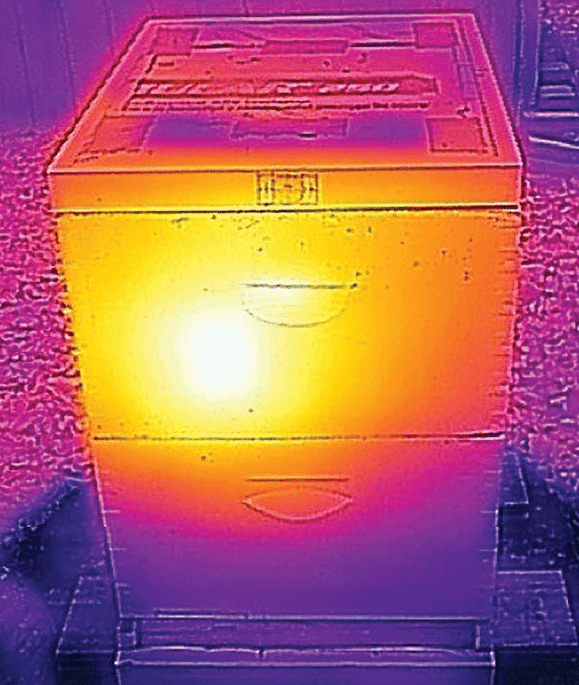
Now, I'll admit. I cheated from time to time. I didn't dare crack the lid, but I did put my ear up to the hive and listen for the hum of the bees inside staying warm. If it was hard to hear, I would knock on the hive, and they would respond with an increase in volume letting me know they were still there.
I could not wait to get into my hives when winter began to thaw and spring started to arrive. On the fist warm day over 60 degrees, I knew it was safe to take a peak. I opened my first hive and it was bubbling with bees. I was so excited to see a healthy population getting ready for the spring. But when I opened the lid of the second hive... silence.
Where are all the bees? I pulled out frames... and looked in the top box... nothing! I looked in the second box... nothing again! Just 2 weeks ago they were happy and healthy inside. But now, they were gone. They had plenty of resources and by all accounts they were healthy. I tried to understand because there were no dead bees. Just a mysteriously empty box. For some unknown reason the colony "absconded". A beekeeping term used to describe the departure of a hive for unknown reasons.
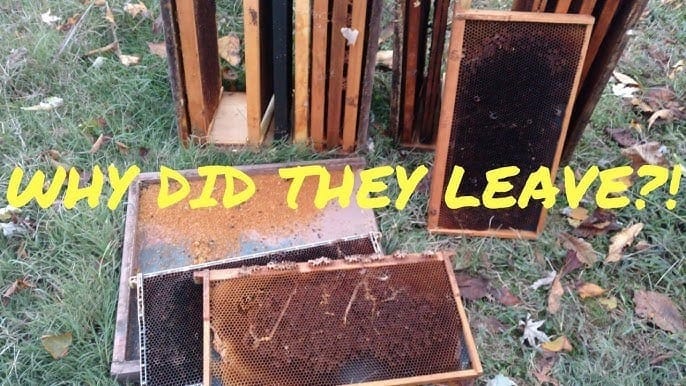
When I inquired with more experienced beekeepers about what might have happened, I received a variety of answers. Which normally suggests, no one really knows. But when I talked to one beekeeper and explained my diligent care, repeated inspections, and regular attention, she gave the answer that made most sense. She said, "I think you loved them too much." What I considered to be faithful love and attention, was more of an unwelcome intrusion into their home. I was treating my bees like pets instead of preserving their life in the wild.
So from now on, I'm careful to provide care. But I try to let the bees do what they do best without too much help from me. As Wendell Berry once said,
"We cannot know what we are doing until we know what nature would be doing if we were doing nothing."
This became my new passion in beekeeping. Not only did I want to raise bees, but I also wanted to learn as much as I could about these amazing creatures. Because in the end, I want to preserve the integrity of who God created the bee to be with minimal interference from me.