Drawing to a Close

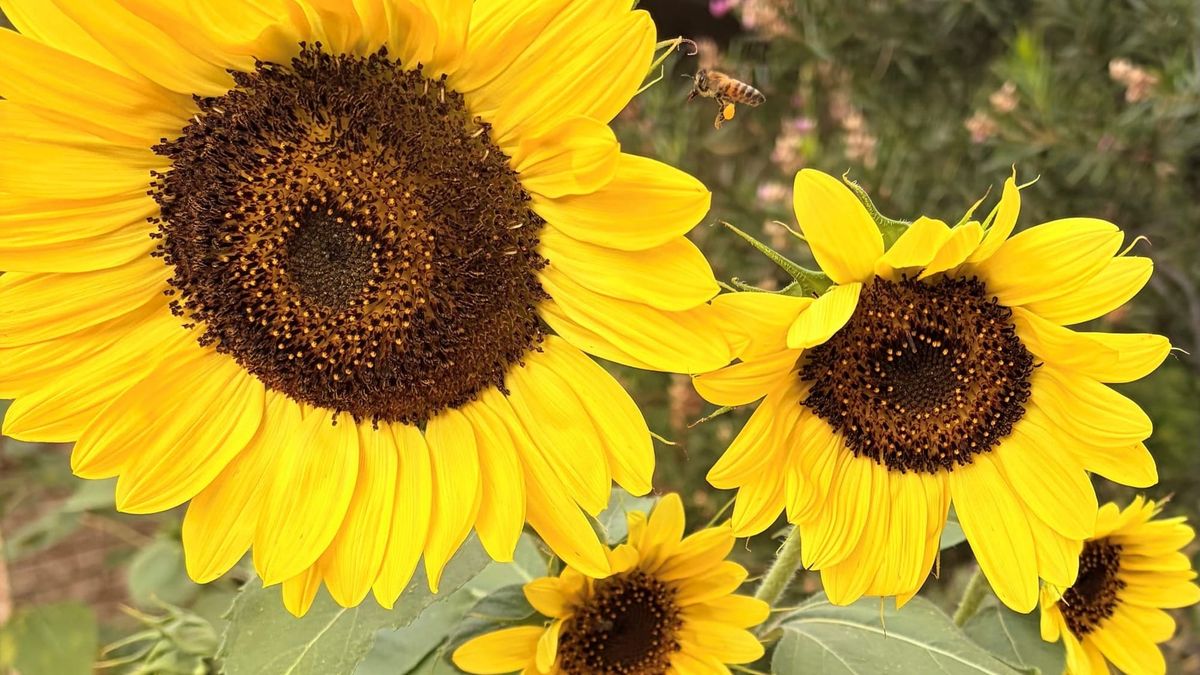
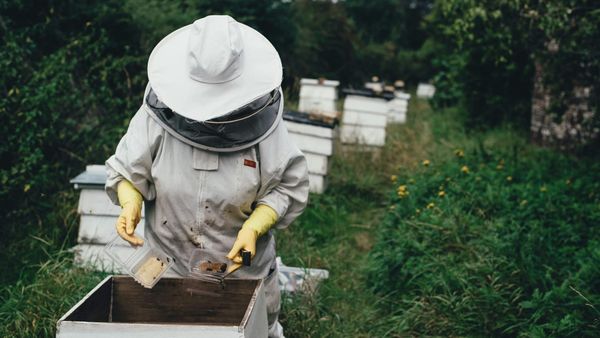
This may be the busiest time of year for a beekeeper. Honey is being harvested, mites are being tested, fall feeding and winter prep shift into high gear. Which means there are a number of activities all taking place at once.
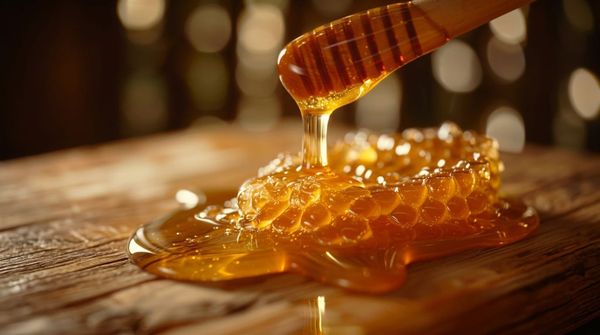
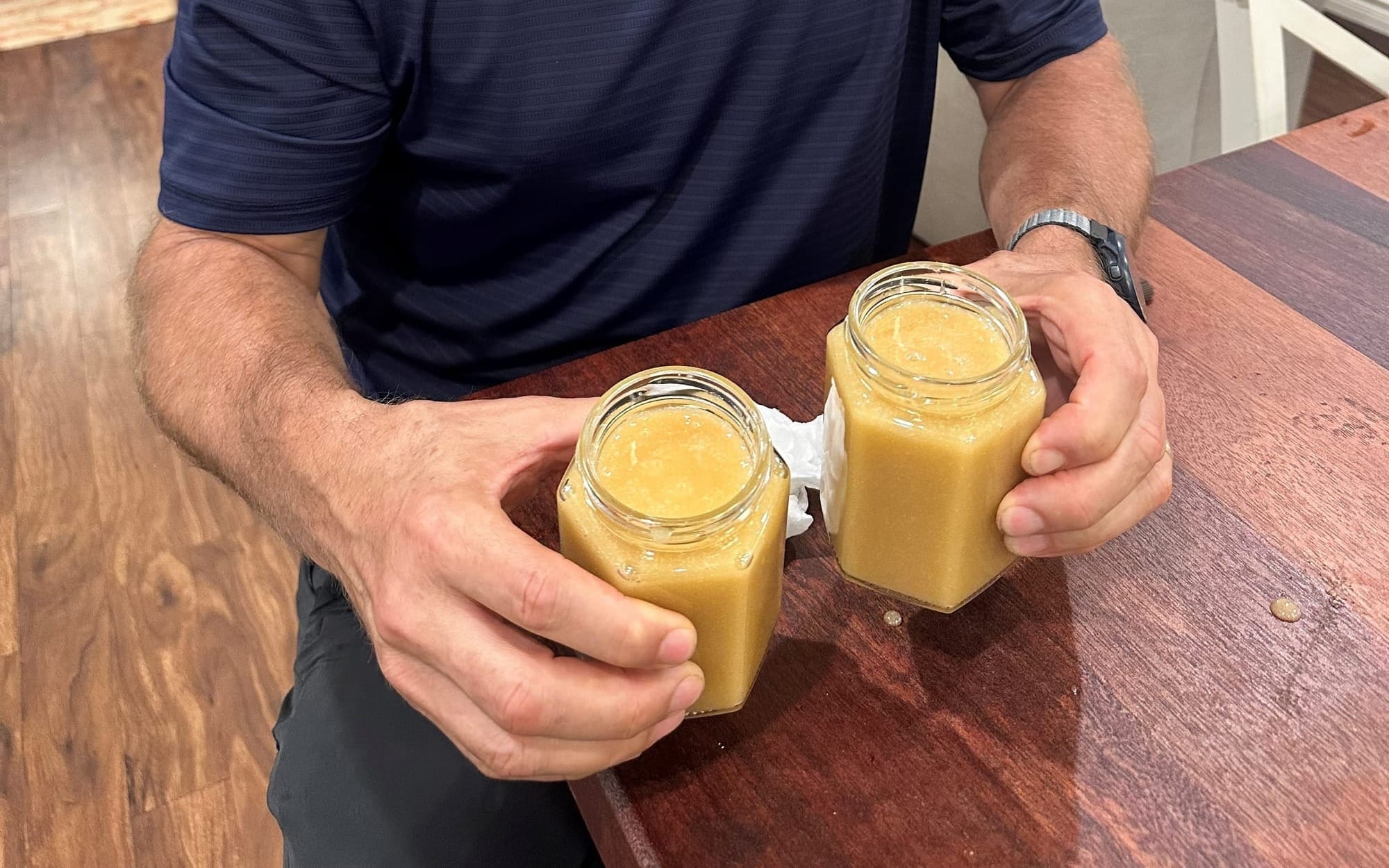
As it turns out, I ended up doing 3 separate harvests at different times at each of my 3 apiaries. None of the harvests were bountiful, but when combined, it allowed me to share the fruits of my labor with family and friends in the area. Not only did we bottle jars of raw honey but we also finished the season making creamed honey as well. And that's not an easy endeavor. At least, not when you do it by hand.
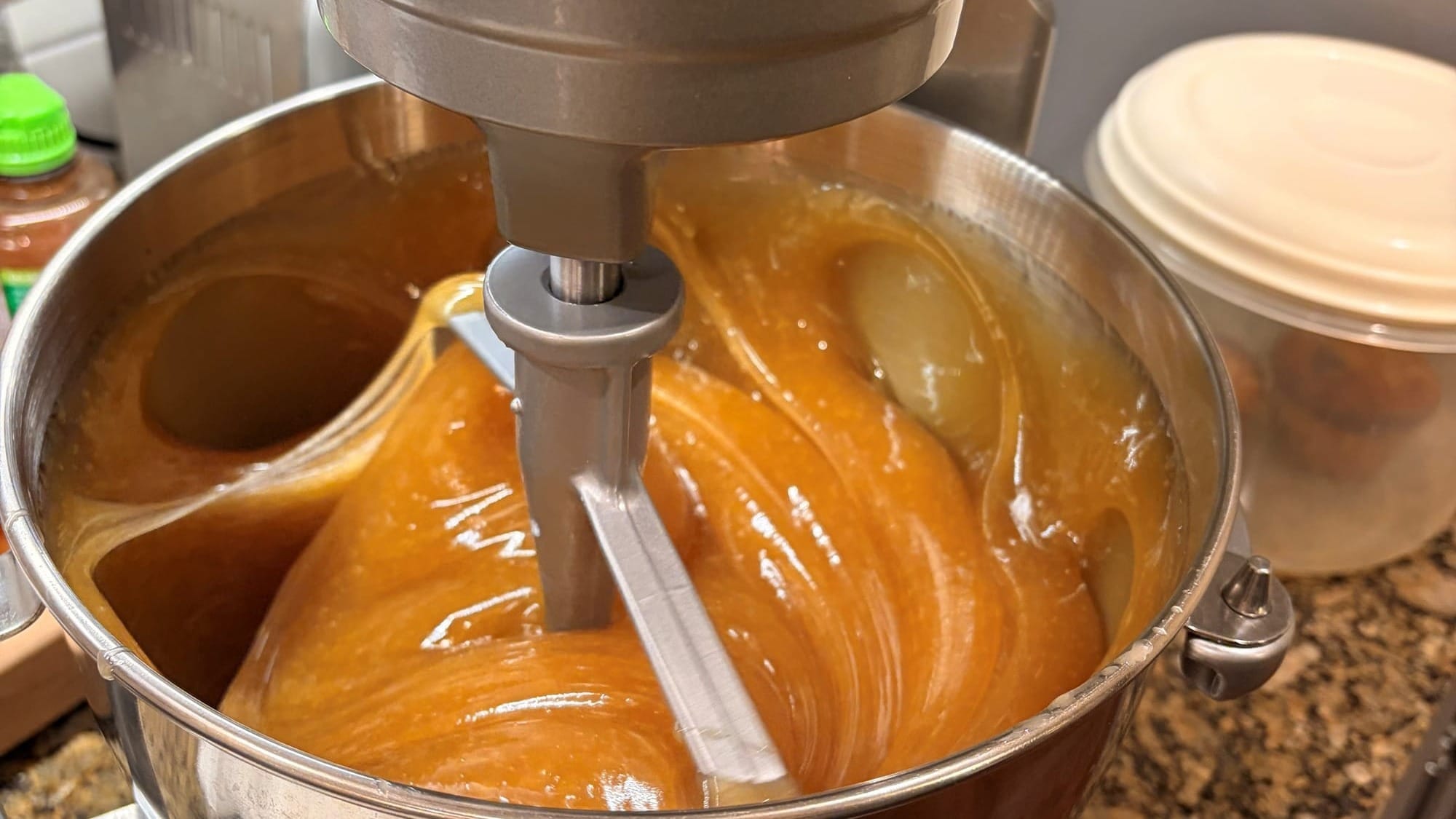
The process begins by gently heating honey with a double boiler in order to remove all the crystals in the honey. Once this is complete, the honey is quickly cooled by removing the warm honey and placing it in a bowl inside the freezer. The honey is cooled and stirred repeatedly until it reaches a temperature of 65 degrees. At this point a seed is added to the honey at a 1 to 10 ratio. And when I say "seed", think sourdough bread. Because a creamed honey seed has a silky smooth texture made from ultrafine crystals. Once added to the "runny honey", these crystals permeate the entire batch so that all of the honey takes on the same silky smooth texture. After 2 hours of mixing (15 minutes on and 15 minutes off times 4) the creamed honey is put in jars and cured at 55 degrees for 2 weeks. My wife and I only did twenty 12oz jars and it took us close to 10 hrs. Whew!
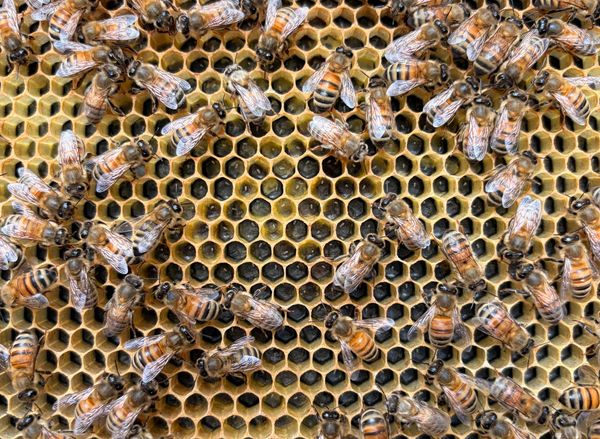
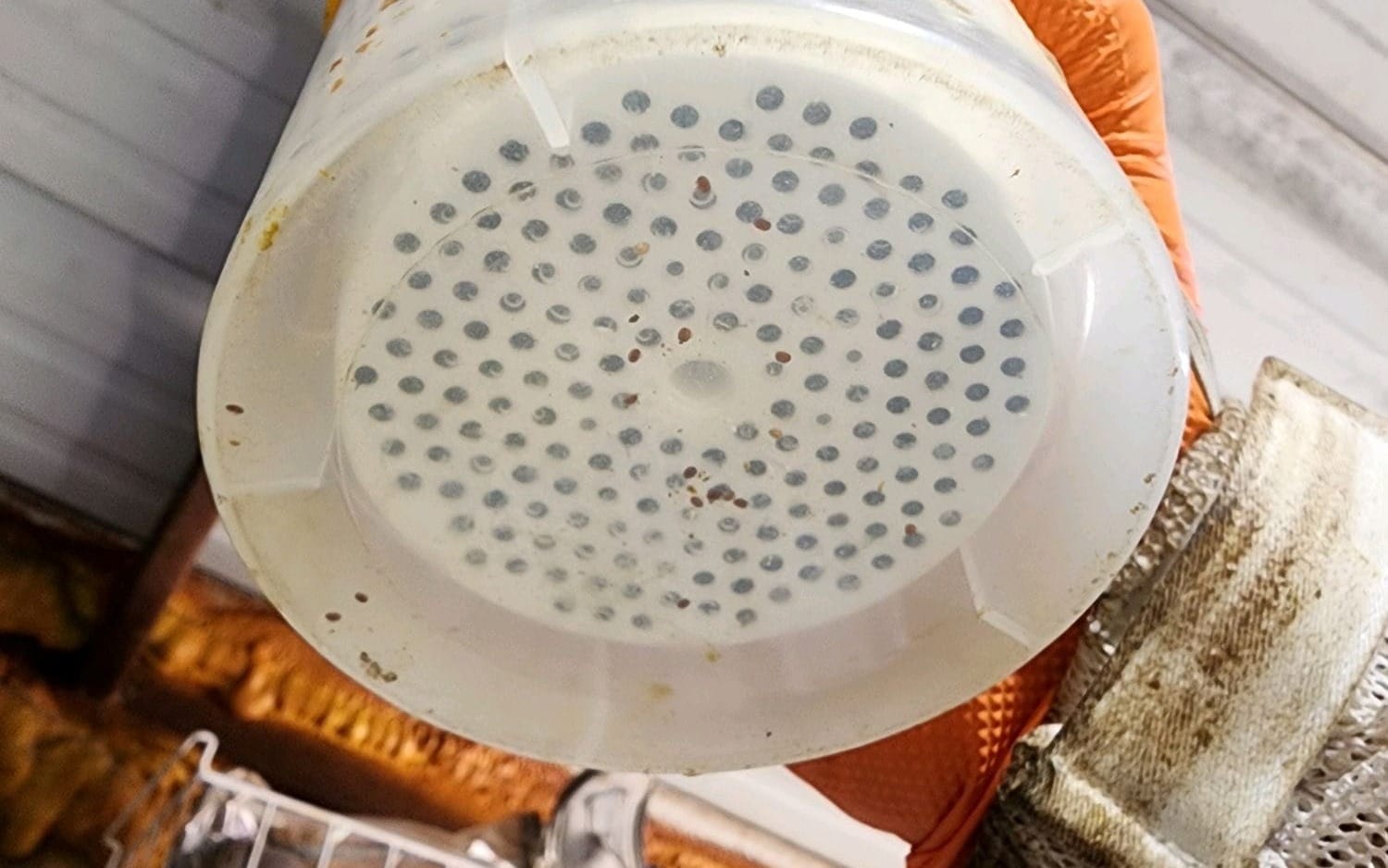
When I'm not in the kitchen making creamed honey, I'm back in the bee yard testing for Varroa mites. These nasty little creatures are the honeybee's worst enemy. They are parasitic to the bees but the biggest threat is the deadly diseases they pass on to the bees. Since honeybees have no natural defense to this pest, left untreated, the honeybee colony will eventually collapse. So it is essential for beekeepers to keep these destructive creatures in check. Their presence can never be eliminated but their impact can be minimized.
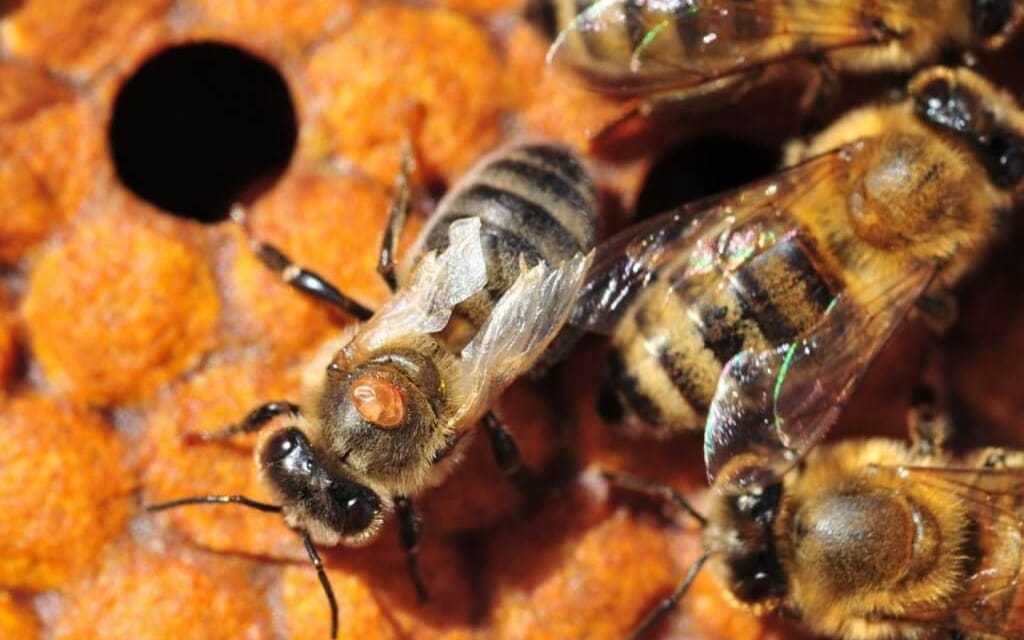
This begins with testing the bees to see how many mites can be counted in a sample size of 300 bees (about one cup). As a beekeeper, I want to see 2 mites or less. Otherwise, I need to apply one of a variety of treatments available, each with different application parameters. And I'll be honest, this is my least favorite part of beekeeping. But at the end of the day, it is also the most important.
Once the honey harvest is completed and the colonies are healthy, now it's time to get ready for winter. This means the bees need to be healthy and well fed with plenty of resources hidden inside the hive to make it through the freezing cold months ahead. My job as a beekeeper is to make sure their pantry is full and their bodies are fat. Because unlike summer bees that only live 3-4 weeks, winter bees live 3-4 months. The same bee will adjust its physiology to survive different seasons of the year.
It's really a remarkable adaptation in nature, but I think we experience the same reality with our faith as well. Different seasons in life require different measures of faith. After all, there are some seasons when life just moves along mostly uninterrupted by hardship or difficulty. And yet, there are other times when suffering becomes a daily experience. Sometimes it's a hardship we are facing in our own lives, but even more difficult is witnessing the suffering of someone we love.
Much like the bees, something inside us needs to change. We must learn to rely on a strength we do not possess on our own. Trusting in the Lord more than we trust in ourselves. As Jesus reminded Paul, may we be reminded as well.
“And Jesus has said to me, “My grace is sufficient for you, for power is perfected in weakness.” Most gladly, therefore, I will rather boast about my weaknesses, so that the power of Christ may dwell in me. Therefore I am well content with weaknesses, with insults, with distresses, with persecutions, with difficulties, for Christ’s sake; for when I am weak, then I am strong.” (2 Corinthians 12:9–10, NASB95)
Our ultimate strength is through complete surrender. After all, if dependence on God is the goal (and it is), then weakness is our advantage. So as we go through seasons in life, whether good or bad, may we be reminded of the strength we possess from within. His grace is always sufficient and His power is perfected in our weakness. So take heart my friends!
“Blessed is a man who perseveres under trial; for once he has been approved, he will receive the crown of life which the Lord has promised to those who love Him.” (James 1:12, NASB95)